ACA Open Enrollment Is Live: Subsidy Cliff Survival for SC Freelancers
Open Enrollment for 2027 coverage opened Sunday, November 1 - three days ago. If you are a freelancer, consultant, 1099 worker, or LLC owner in South Carolina, you have until January 15 to enroll, but the real deadline is December 15 if you want coverage starting January 1. My phone has been ringing off the hook since Sunday morning - self-employed folks logging in, seeing the 2027 premium numbers, and calling in a panic.
It is Year 2 of the Subsidy Cliff. Enhanced premium tax credits expired on December 31, 2025. The original ACA subsidy structure is back. And for self-employed people in SC with any kind of decent income, the numbers are ugly.
Here is the direct, unvarnished playbook for surviving this - now that OEP is live and the clock is running.
What You Are Seeing When You Log In Right Now
Let me show you what “brutal” looks like with real numbers from clients I have been working through 2026 coverage with. These are projections for 2027 based on filed carrier rates, but they match the patterns I saw all year and line up with what is showing on Healthcare.gov right now.
Case 1: 44-year-old freelance graphic designer in Summerville, earning $92,000 net
- 2025 under enhanced credits: Silver plan premium after subsidy around $450/month
- 2027 without enhanced credits: Same Silver plan with zero subsidy around $820/month
- Annual increase: $4,440
Case 2: 52-year-old consultant in West Ashley, earning $145,000 net
- 2025 under enhanced credits: Gold plan premium after subsidy around $790/month
- 2027 without enhanced credits: Same Gold plan (no subsidy at all) around $1,450/month
- Annual increase: $7,920
Case 3: 38-year-old LLC owner (contract software developer) in Mount Pleasant, earning $175,000 net
- 2025 under enhanced credits: Plan cost around $650/month
- 2027 without enhanced credits: $1,580/month with zero subsidy
- Annual increase: $11,160
Different age, different income, same brutal story. The subsidy cliff ate anywhere from $4,000 to $11,000 out of the annual household budget for each of these households. 2027 is not kinder - if anything, it is worse because carriers have now had a full year to reprice their risk pools around the post-cliff enrollment mix.
OEP just opened last weekend. You have until December 15 for January 1 coverage, and until January 15 for February 1 coverage. Do not wait. Let’s work through this now.
Strategy 1: The SEP-IRA / Solo 401k MAGI Play
If you’re self-employed and your income is hovering near 400% of FPL (the cliff), the single most powerful tool you have is retirement contributions.
A SEP-IRA or Solo 401k contribution lowers your Modified Adjusted Gross Income (MAGI). And MAGI is what Healthcare.gov uses to calculate your subsidy eligibility. So a dollar contributed to a SEP-IRA is a dollar that doesn’t count against your subsidy calculation.
Here’s what that looks like in practice:
Case: Freelance consultant, projected 2027 net self-employment income of $132,000 (roughly 425% of FPL for a family of four - over the cliff by about $7,800).
- Without retirement contribution: Zero subsidy. Full Silver plan cost around $1,400/month for family of four
- With a $10,000 SEP-IRA contribution: MAGI drops to $122,000 (about 390% FPL, below the cliff)
- With subsidy on Silver plan: Around $900-$1,000/month
That’s $400-$500/month in premium savings, or $4,800-$6,000/year, on top of the tax deduction from the SEP-IRA contribution itself. The retirement savings essentially pays for itself through the subsidy recovery.
This only works if your income is close enough to the cliff that a reasonable retirement contribution can get you under. If you’re at $200K, no contribution is going to get you to 400% FPL. But if you’re in the $125-140K range with a family of four, this is often the single most impactful move.
Before you do this: Talk to a CPA. Retirement account contribution limits, deadline rules, and Solo 401k setup requirements matter. I can help you understand the subsidy side of the math, but the tax side needs a CPA’s eyes.
Strategy 2: The ICHRA for LLC Owners
If you operate as an LLC (especially taxed as an S-corp), you have access to something that traditional freelancers don’t: the ability to put yourself on payroll and run an Individual Coverage Health Reimbursement Arrangement (ICHRA).
Here’s what an ICHRA does:
- Your business establishes an ICHRA plan (simple one-time setup)
- You’re an employee of your own business
- The ICHRA reimburses you tax-free for individual ACA plan premiums
- The reimbursement is a business expense, so it comes out of pre-tax dollars
For a self-employed LLC owner paying $1,500/month out of pocket for health insurance, an ICHRA lets you pay that same premium using pre-tax business dollars instead of post-tax personal dollars. At a combined effective tax rate of 30% (federal plus state plus self-employment tax), that’s $450/month in tax savings. That’s $5,400/year in your pocket without changing a single thing about your actual health plan.
There are a few requirements:
- You need an actual LLC or other business structure
- You need to be able to run yourself through payroll (most S-corps already do this)
- You need formal ICHRA documentation (I help with this)
- You can’t also claim the self-employed health insurance deduction on top of the ICHRA
I’ve set up more ICHRAs in the last year than in the previous three combined. It’s becoming one of the dominant strategies for LLC owners hit by the Subsidy Cliff.
If you own an LLC and you’re facing a 2027 premium you can’t afford, an ICHRA is probably the conversation we need to have. Give me a call at (843) 594-1759 and let’s see if it fits your structure.
Strategy 3: The Silver CSR Lock (For Lower-Income Freelancers)
If your 1099 income is on the lower end - say $30,000 to $60,000 for a household of one or two - you almost certainly qualify for Cost-Sharing Reductions on Silver plans. And Silver CSR is where the real protection lives.
Here’s what CSR does on a Silver plan for a single freelancer earning $40,000 (roughly 260% FPL):
- Deductible: Drops from around $4,500 to around $2,700
- Out-of-pocket max: Drops from around $9,200 to around $7,000
- Copays: Generally lower across the board
And for a freelancer at $30,000 (roughly 200% FPL):
- Deductible: Drops from $4,500 to around $900
- Out-of-pocket max: Drops from $9,200 to around $2,900
The single biggest mistake I see from lower-income freelancers is picking a Bronze plan because the premium is $50-$100 lower than Silver. If you qualify for CSR, Silver is better than Bronze in almost every scenario because the deductible reduction is worth far more than the premium savings.
Bronze makes sense if you’re healthy, never use the plan, and just want catastrophic protection. Silver with CSR makes sense if you’re ever going to actually use the plan.
Strategy 4: Real-World Income Estimation
One of the trickiest parts of ACA subsidy eligibility for self-employed folks is that your income is a projection, not a fixed number. You’re estimating what you’ll earn in 2027 before 2027 has started.
Here’s the thing: the subsidy is based on the estimate you put on your Healthcare.gov application. If you estimate $80K and actually earn $110K, you’ll owe some of that subsidy back at tax time. If you estimate $110K and actually earn $80K, you might be entitled to an additional refund.
But the bigger issue is that overestimating your income leaves subsidy money on the table in real time. And underestimating can create a subsidy repayment surprise at tax time.
My rule of thumb for freelancers:
- Look at your last 2 years of self-employment net income (Schedule C)
- Average them
- Adjust for any obvious changes (new client, lost client, new product launch, etc.)
- Use that as your 2027 estimate
- Re-estimate every quarter and update Healthcare.gov if your income changes meaningfully
Most freelancers forget the last step. You’re allowed to update your income projection throughout the year. Healthcare.gov will recalculate your subsidy. This is especially important if your income takes a meaningful dip mid-year - you might be eligible for a larger subsidy that you’ll miss out on if you don’t update.
Strategy 5: HSA-Compatible Bronze Plans for High Earners
If you’re a high-earning freelancer who doesn’t qualify for any subsidy (over the 400% FPL cliff) and can’t bring your MAGI low enough to qualify, your best play might be a combination strategy.
The combo:
- HSA-eligible Bronze plan (cheapest option, catastrophic protection)
- Max out HSA contributions ($8,550 for family, $4,300 for self-only in 2027)
- Self-fund routine care out of HSA dollars
- Keep the HSA as a long-term investment account
This strategy does three things:
- Lowers your current-year taxable income through HSA contribution
- Gives you pre-tax money to pay for routine care that the Bronze plan’s deductible doesn’t cover
- Builds a long-term tax-advantaged medical savings account
The downside: you’re taking on the full Bronze plan deductible in catastrophic scenarios. A bad hospitalization with a $7,500 deductible is real exposure.
This isn’t the right move for everyone. But for a high-earning single freelancer or a small family where everyone is generally healthy, the math often works out better than paying full price on a Silver or Gold plan.
Which Carriers to Look At in SC
The SC marketplace for 2027 has a few major players. Here’s what I’m seeing:
BlueCross BlueShield of South Carolina. The broadest network in the Lowcountry. If you want MUSC, Roper St. Francis, Trident, and most specialists, BCBS is usually the cleanest answer. Higher premiums but fewer network surprises. For self-employed folks with established doctor relationships, this is often the right call.
Ambetter from Absolute Total Care. Lower premiums, tighter network. Works well for generally healthy folks who don’t have strong existing provider relationships. Some Ambetter plans have limited MUSC specialist access, which is a dealbreaker for some clients and fine for others.
Molina Healthcare. Budget-friendly premiums. Strongest for folks near the lower-income thresholds where CSR is protecting them. Smaller network than BCBS.
Cigna offers a few plans in some SC counties but isn’t available statewide.
The right carrier depends on your doctors, your medications, your budget, and whether you have flexibility in your care setup. There’s no universally best answer.
The Math on Waiting
A lot of self-employed folks are going to procrastinate on this. I see it every year. The thinking is: “I’ll sign up closer to the deadline when I have more information.”
Here’s why that costs you:
-
January 1 coverage requires enrollment by December 15. That is six weeks away. If you enroll December 16-January 15, your coverage starts February 1. That’s a full month exposed if you get sick or hurt in January.
-
Healthcare.gov is running smoothly right now. The site is stable in early November - I pulled quotes for three clients this morning without a hiccup. By the second week of December, it’s overloaded. Pages don’t load. Enrollments fail to confirm. You end up on hold for hours trying to fix it.
-
I’m not always available. My calendar fills. If you want the Blinco Audit experience in mid-December, you might not be able to get one.
-
Provider network surprises are easier to fix in November. If you sign up for a plan and discover in early December that your doctor isn’t in network, you have time to switch. If you discover it on December 20, you might not.
Early OEP is calm OEP. And we are still in the calm window right now. Late OEP is chaos OEP. I know which one I’d rather work through with a client.
A Real Conversation I Had This Week
A 47-year-old freelance attorney in Summerville called me first thing Monday, the day after OEP opened. She was looking at a $1,350/month premium for her family of three on a Silver plan, up from $620/month under enhanced credits. She was in tears on the phone.
Here’s what we did in 90 minutes:
- Reviewed her actual 2027 projected income: $138,000 net from her practice
- Realized she wasn’t yet using a SEP-IRA
- Worked out that a $12,000 SEP-IRA contribution (her CPA later confirmed she could legally do up to $25,000) would drop her MAGI to $126,000, under the 400% FPL cliff
- Recalculated her subsidy: She’d be eligible for about $430/month in advance premium tax credits
- Final Silver plan cost: $920/month - still not great, but $430/month less than the sticker shock number
She’s not back to 2025 levels. Nobody is. But she’s in a place she can manage without wrecking her business.
That conversation took 90 minutes. It’s what a Blinco Audit looks like when the Subsidy Cliff is eating a client alive.
What I Need From You
If you’re a freelancer or LLC owner and you want to work through your 2027 options with me, come prepared:
- Your 2025 and 2026 tax returns (or projections if 2026 isn’t filed yet) so I can understand your actual income pattern
- Your list of doctors, hospitals, and medications
- Your business structure (sole prop, LLC, S-corp, partnership)
- Whether you have a CPA and their contact info if you’re willing to share
- Your real budget for health insurance - what you can afford, what you can’t
Call me at (843) 594-1759. We are in the first week of OEP right now - this is when I can give each call the time it needs. By December it gets frantic. Book this week and we’ll work this out together.
I don’t stop until you’re covered.
Frequently Asked Questions
Can self-employed people really use an ICHRA? If you operate as an LLC, S-corp, or other formal business structure, yes - an ICHRA is available to you. Sole proprietorships generally can’t use an ICHRA because the IRS doesn’t treat a sole proprietor as an employee of their own business in the same way. If you’re currently a sole prop and considering an LLC conversion, an ICHRA can be one of several reasons to make that change.
How much can a SEP-IRA contribution really save on my ACA premium? If you’re within a few thousand dollars of 400% FPL, a SEP-IRA contribution can swing you from zero subsidy to meaningful subsidy eligibility. The exact savings depend on how far over the cliff you are, your age, your family size, and the benchmark plan cost. A $10,000 SEP contribution for a family of four close to the cliff often recovers $4,000-$6,000 in annual subsidies.
What’s the 2027 Open Enrollment deadline? Open Enrollment runs November 1, 2026 through January 15, 2027. Enroll by December 15 to get coverage starting January 1. Enroll December 16-January 15 and coverage starts February 1.
Is Bronze really worse than Silver for low-income freelancers? Almost always, yes. If you qualify for Cost-Sharing Reductions (under 250% FPL), Silver plans give you dramatically lower deductibles and out-of-pocket max that Bronze doesn’t. The slightly lower Bronze premium is usually a losing trade once you factor in realistic healthcare usage.
Can I change my income estimate on Healthcare.gov mid-year? Yes. You can update your income projection at any time during the year, and your subsidy will recalculate. This is especially important for freelancers whose income fluctuates. Going the wrong direction on your estimate can either leave money on the table or create a repayment obligation at tax time.
Does SC have any state-run health insurance programs for freelancers? South Carolina uses the federal marketplace (Healthcare.gov) for ACA coverage. SC did not expand Medicaid, so working-age adults without dependent children generally aren’t eligible for SC Healthy Connections (Medicaid) regardless of income. Kids can qualify for Medicaid or CHIP at higher income thresholds than adults.
Frequently Asked Questions
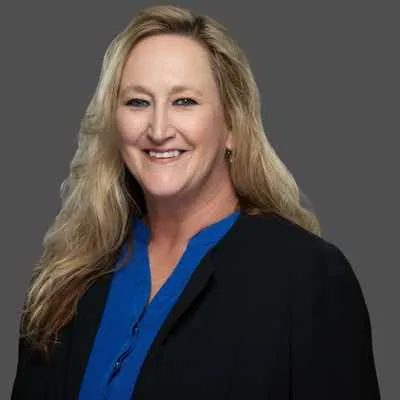
Open Enrollment for 2027 coverage opened November 1 and runs through January 15. Here's the subsidy cliff survival playbook for SC freelancers, 1099 workers, and LLC owners - act now before the December 15 deadline for January 1 coverage. This post is written by Michelle Blinco Smith, a licensed South Carolina insurance agent, as part of the Affordable Health & Dental blog for Lowcountry residents.
Anyone in South Carolina - and especially the Summerville, Charleston, and Berkeley county area - who wants a plain-English answer to an insurance question. Michelle writes every post based on real conversations with real Lowcountry clients, so the guidance is specific to how insurance actually works in SC.
Call Michelle directly at (843) 594-1759 or use the contact form. Consultations are free, there is no obligation, and you will talk to a licensed agent who can run real quotes from every carrier in your zip code and walk you through your options in plain English.